Grease trap & FOG compliance
Quoted per sitePumping before the 25% rule is at risk, a licensed hauler manifest on file, and a compliance log kept current. Your grease interceptor is never the reason an inspection goes sideways.
Managing a building instead? Request a Building Compliance Review →
Every visit, in full.
- Grease interceptor pumping, sized and scheduled to your kitchen's output.
- Licensed hauler's disposal manifest filed for every service: hauler name, MECP/ECA registration number, volume hauled, and disposal facility.
- Compliance log entry added and kept accessible for the required 2-year retention window.
- 25% rule monitoring, so pump-outs happen before grease and solids build past the legal threshold, not after.
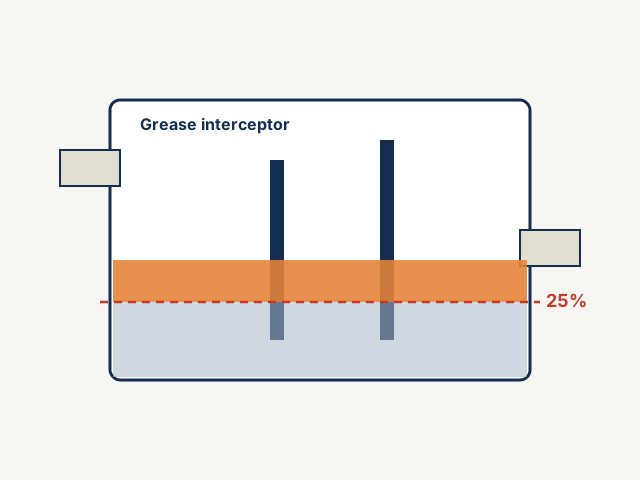
The 25% rule, not a fixed calendar.
Toronto's sewer by-law requires pumping before grease and solids exceed 25% of your interceptor's liquid volume. That's checked at the 4-week mark, with up to 8 weeks allowed between pump-outs only if you're staying under that line. Higher-volume kitchens hit 25% faster, which is why pumping frequency tracks volume, the same way hood cleaning does.
| Kitchen volume | Examples | Typical pump-out interval |
|---|---|---|
| Critical (24-hr / heavy frying) | Ghost kitchens, 24-hr diners | Every 2–4 weeks |
| High volume | Korean BBQ, wok/wings/Indian kitchens | Every 4–6 weeks |
| Moderate volume | Nursing home & corporate kitchens | Every 8–12 weeks |
| Low volume (no frying / seasonal) | Church kitchens, event spaces | Semi-annually |
Quoted per site.
Grease-trap pumping is priced against your interceptor's size and location on a walkthrough. There's no single flat rate we can honestly publish. Bundled with a hood & exhaust contract, it comes at a discount off the standalone rate.
O.Reg 347 & Chapter 681
Toronto Municipal Code Chapter 681 (the Sewers By-law) sets the legal requirements for grease interceptor maintenance, and non-compliance carries real fine exposure.
Questions about this service.
What is the 25% rule?
Your grease interceptor must be pumped before the grease-and-solids layer exceeds 25% of its total liquid volume. Interceptors can go up to 8 weeks between pump-outs only if they're staying under that line by the 4-week check. Otherwise, pumping needs to happen sooner.
What happens if I skip a pump-out?
Beyond the fine exposure under Chapter 681, an overloaded interceptor is the direct path to a blocked kitchen drain. It's an operational risk on top of a compliance one. We monitor the schedule so it doesn't come down to guesswork.
Do you handle the paperwork?
Yes: every pump-out comes with a licensed hauler's manifest (hauler name, MECP/ECA registration number, volume hauled, disposal facility) filed into your compliance log, kept for the required 2-year retention window.