Kitchen compliance built around Toronto's own by-law.
Toronto Municipal Code Chapter 681 sets real fine exposure for grease-trap non-compliance, on top of NFPA 96's hood-cleaning requirements. Northfire covers both under one schedule and one documented binder.
Two obligations, one Toronto address.
Every commercial kitchen operating in Toronto answers to two separate rules: NFPA 96 for hood and exhaust cleaning, and the city's own sewer by-law for grease-trap maintenance. Most kitchens track one of the two through a vendor and handle the other informally, if at all. Northfire covers both, sized to your kitchen's actual volume, with a compliance binder that stays current between inspections.
Why now. The two rules Toronto enforces.
NFPA 96
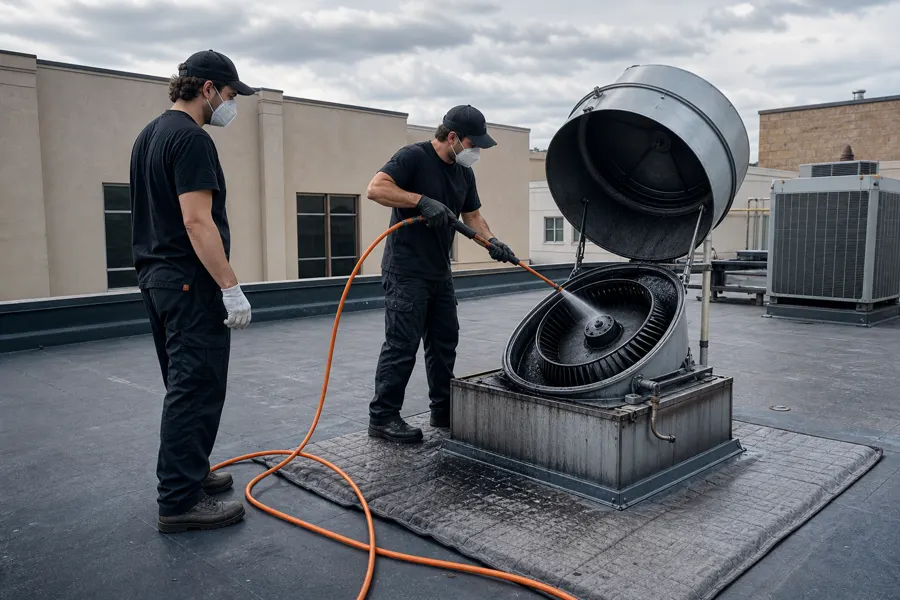
Adopted into the Ontario Fire Code in 2025, NFPA 96 governs cleaning of your hood, canopy, ducts, and rooftop fan. Toronto's fire inspectors enforce it the same way inspectors do province-wide: required frequency runs monthly for 24-hour, high-heat kitchens down to annually for low-volume, seasonal ones.
Chapter 681
Toronto Municipal Code Chapter 681, the Sewers By-law, requires grease interceptors to be pumped before the grease-and-solids layer exceeds 25% of liquid volume, with a compliance log kept on site for at least two years.
Find your Toronto compliance path.
High-heat kitchens
Korean BBQ, wok, Indian, wings: NFPA 96 puts you on a quarterly cleaning requirement.
Book Your Compliance WalkthroughStandard restaurants
Casual dining and cafes fall under NFPA 96's semi-annual requirement.
Book a Compliance AssessmentProperty managers
Building-wide compliance across every commercial tenant kitchen.
Request a Building Compliance Review